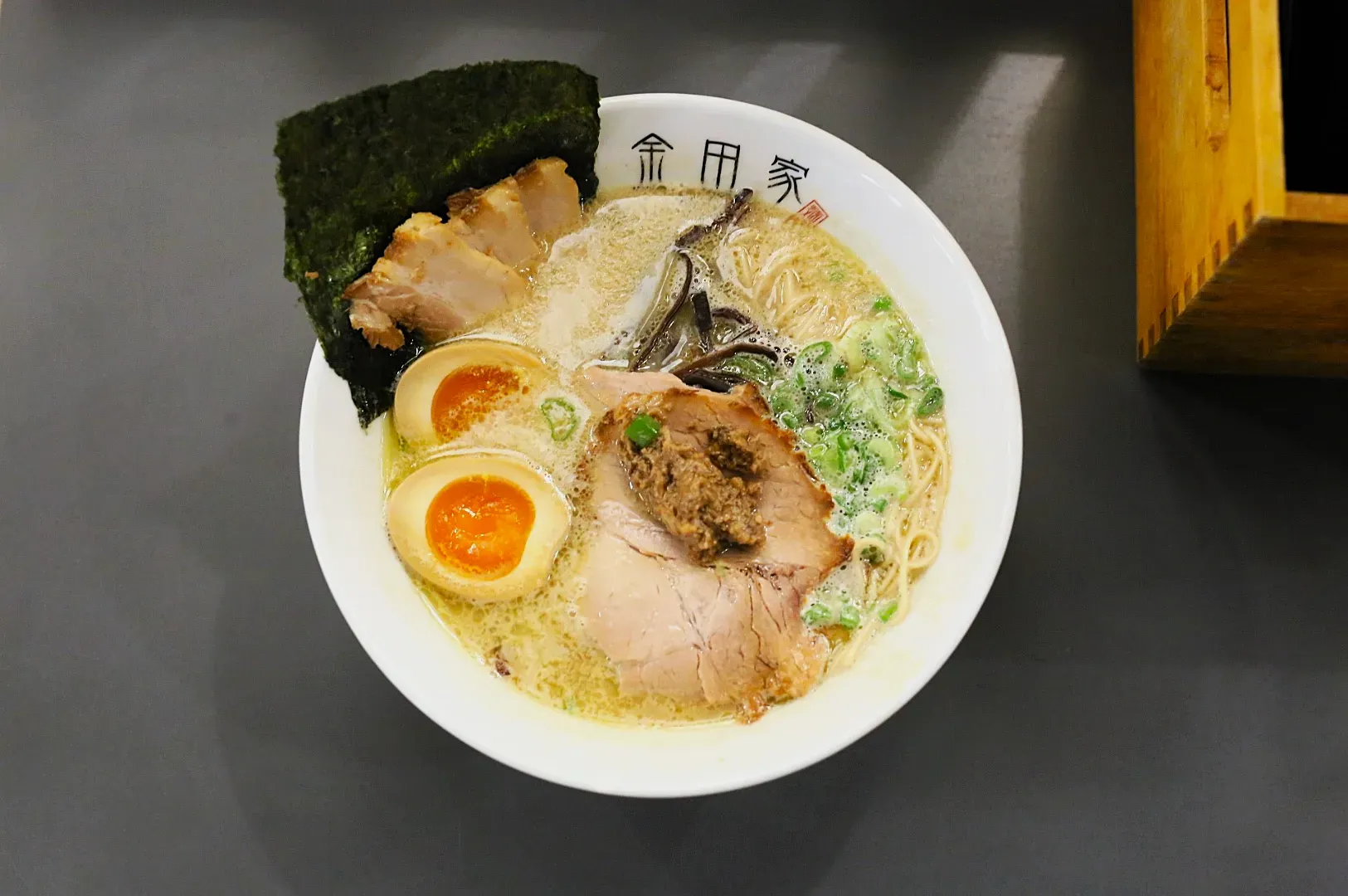


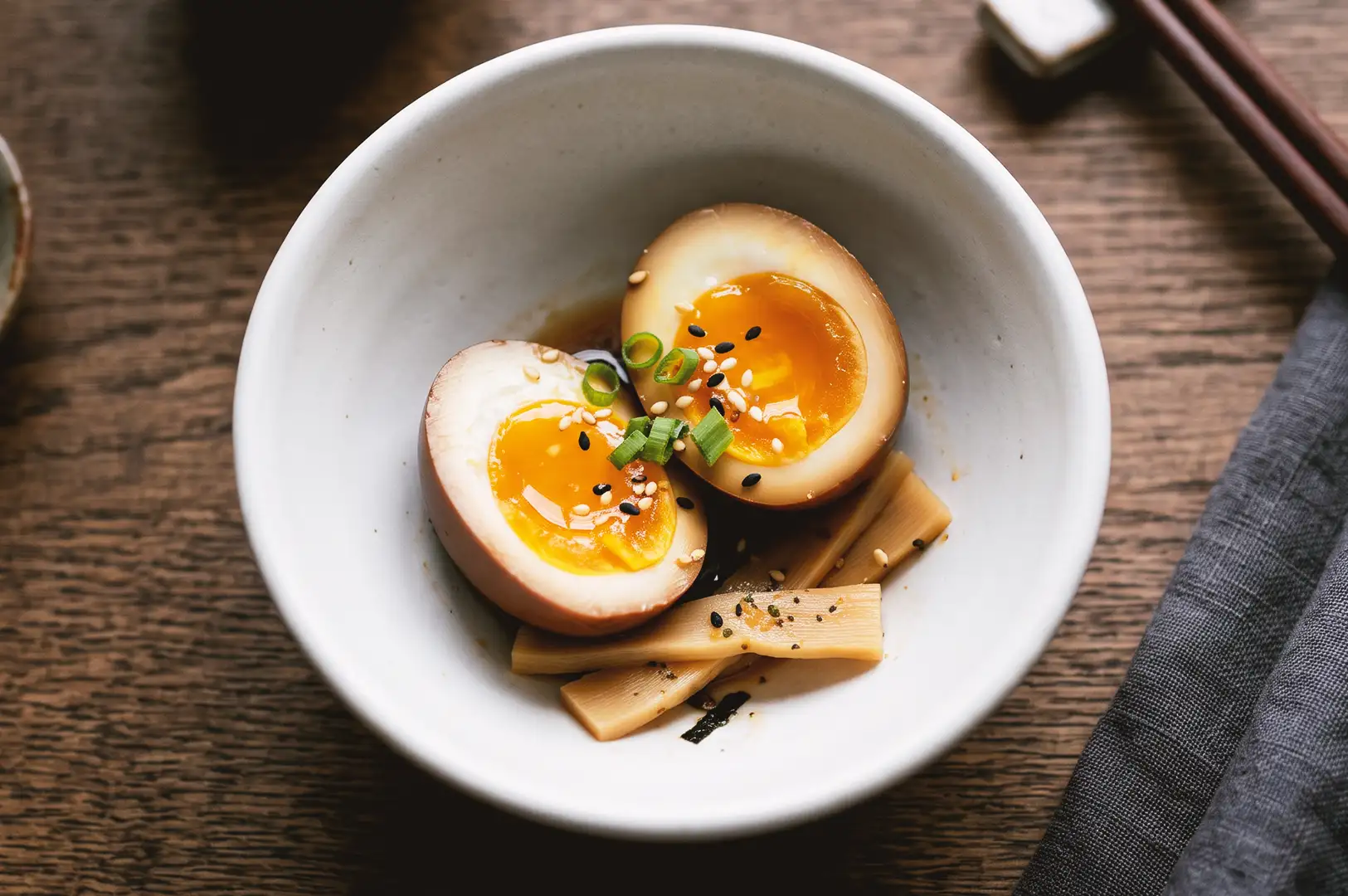
There's a moment in almost every great ramen bowl that I look forward to more than I probably should. It's when the egg gets sliced open and that soft, glossy, amber-edged yolk shows itself. The broth might be the headline and the noodles might be the backbone, but for me, the ramen egg is the small detail that tells you someone cared.
For a long time, I assumed that kind of egg belonged only behind a ramen counter. It looked too precise and too polished, the sort of thing that needed a trained hand and a secret recipe. The truth is kinder than that. A ramen egg is mostly patience, a timer, and a good soy sauce mixture, the perfect marinade. Once you understand why each step matters, it becomes one of the most rewarding things you can make in your own kitchen.
So let's break it down properly: what these eggs are, where they come from, and how you can make perfect ramen at home in Singapore without the guesswork.
What Is a Ramen Egg? Ajitsuke Tamago Explained

A ramen egg is a soft boiled egg that's been peeled and marinated in a sweet and salty soy sauce based marinade. In Japan, it's called ajitsuke tamago, often shortened to ajitama. You might also see it labeled as shoyu tamago or soy sauce eggs.
I love the name's literal meaning. Ajitsuke tamago means ‘seasoned egg,’ and ajitama is the common shortened form. Put together, it's a "flavored egg" honestly, that's the most accurate food name I've come across.
The marinade does two jobs at once. It seasons the egg with deep umami flavor and gives the outside that signature brown tint. It also gently cures the egg, firming the whites and turning the egg yolk into something custardy and rich rather than simply runny.
Where Ajitsuke Tamago Fits in Japanese Cooking and Japanese Cuisine
Like many beloved dishes, the ramen egg has a borrowed beginning. One commonly cited origin story traces the modern ajitama to Kan Chin Tei in Ogikubo, Tokyo, where a Taiwanese-style soy-braised egg reportedly inspired the ramen topping. The chef there served ramen with a Taiwanese braised egg, a soy-marinated egg cooked with herbs and spices. The idea caught on, and savory soft-boiled eggs spread across ramen restaurants throughout Japan.
I find that history quietly beautiful. It's a reminder that Japanese cooking has always absorbed ideas from its neighbors and refined them into something its own. Today, the marinade still varies from shop to shop, but a soy sauce base remains the most common foundation.
For readers in Singapore, there's something familiar here too. Many of us grew up with soy-braised eggs in local home cooking. Ajitsuke tamago sits in that same comforting family, just with a softer yolk and a slightly sweeter edge from mirin.
The Marinade Ingredients That Make the Magic

You don't need a long shopping list. A basic, no-cook marinade can be built from just three liquids:
- Mirin: A sweet Japanese rice wine with lower alcohol than sake. If you want to avoid alcohol, look for a sweetened mirin-style cooking seasoning with very low or no alcohol, or use water plus a little sugar.
- Regular soy sauce: Use a standard Japanese soy sauce if possible. Other soy sauces can work, but flavour and saltiness will vary. Use tamari if you need a gluten-free option, or low sodium soy sauce if you're watching salt.
- Dark soy sauce: Thicker, darker, less salty, and slightly sweet. It's a Chinese condiment rather than a traditional Japanese one, but it adds deep color and umami quickly. Mushroom dark soy sauce works especially well.
One well-tested ratio uses ¾ cup mirin, ¼ cup regular soy sauce, and ¼ cup dark soy sauce for 4 to 5 large eggs. You can add up to ½ cup of water if you plan to marinate longer than about 6 hours.
Insider knowledge: Many Singapore kitchens already have dark soy sauce in the cupboard because it's such a staple in local dishes. If yours does, you're halfway to a deeply colored ramen egg. No dark soy sauce? Swap in an equal amount of regular soy sauce plus 1 tablespoon of added sugar.
Optional spices can take your marinade further: ½ teaspoon cayenne pepper, 2 sliced garlic cloves or a 1-inch piece of ginger, and 1 star anise. If you add these, simmer the marinade briefly in a small pot so the flavors infuse, then let it cool completely to room temperature before the eggs go in.
Learning From More Than Just One Cookbook: A Review Recipe Perspective
Here's something I wish more recipes admitted: there's no single correct ramen eggs recipe. Read widely, a recipe blog, or a cooking school guide, and you'll find sensible variations along with required recipe ratings that help guide your choices.
Some versions use equal parts soy sauce, mirin, and sake, with a tablespoon each of added sugar and vinegar, and marinate the eggs for 24 hours up to 2 days. Others, like the dark soy sauce version above, are ready in as little as 2 hours because the marinade is more concentrated.
Neither approach is wrong. I think the best ramen eggs recipe is the one that matches your schedule and your taste. If you're making eggs for tomorrow's lunch, choose a slower marinade. If you want them tonight, lean on dark soy sauce.
How to Make Ramen Eggs at Home, Step by Step

Expect about 20 minutes of hands-on work, plus at least 2 hours of marinating. Here's the process using the hot water method, which I prefer for its consistency.
- Prepare the boiling water. Fill a small pot with enough water to cover the eggs by about 1 inch, with room for them to sit in a single layer. Add a pinch of salt or a splash of vinegar. This helps stop egg whites from leaking out of tiny cracks.
- Bring it to a boil, then calm it down. Once the water boils, lower the heat to medium or medium-high so it's bubbling but not at a rolling boil. Rough boiling makes eggs knock together and crack.
- Lower the eggs gently. Use a slotted spoon to place each egg into the hot water. Any egg that cracks badly is better saved for scrambled eggs or hard boiled eggs.
- Start your timer immediately. Cover the pot and time carefully. The cooking process decides everything (more on that below).
- Set up the cold water bath while the eggs cook. Fill a bowl with ice and cold water so it's ready the second your timer goes off.
- Chill the eggs right away. Move the eggs into the cold water bath for a few minutes. Alternatively, use a bowl under cold running tap water for 2 to 3 minutes.
- Peel carefully. Tap each egg gently to crack the shell all over, then start peeling from the wider end. Peeling under running water makes it easier.
- Marinate. Place the peeled eggs in the cooled soy sauce mixture, making sure they're mostly submerged. Turn them occasionally for even color.
Pro tip: For a centered yolk that looks beautiful when sliced, gently stir the water in a circular motion during the first 3 to 4 minutes of cooking. Be careful around the hot pot.
Cooking Time and the Perfect Soft Boiled Egg Yolk

Timing is where a soft boiled egg becomes a ramen egg. For large eggs (about 57 g each) at room temperature:
- 5½ minutes: Soft, just-set whites and a runny yolk. Very delicate and harder to peel.
- 6 minutes: Set whites and a runny egg yolk.
- 6½ minutes: Set whites with a jammy, slightly runny yolk. This is the classic look for perfect ramen eggs.
- 7 minutes: Set whites and a half-set yolk. Easier to peel and more forgiving.
If your eggs come straight from the fridge, add about a minute. Smaller eggs need less time, and extra-large eggs need a little more.
Use these times as a starting point and adjust for egg size, starting temperature and your preferred yolk texture.
Tips for Jammy Ramen Eggs: The Cold Water Bath and Beyond
Never skip the cold water bath. It's the single most important step for a jammy yolk. Eggs keep cooking from their own heat, so without a fast chill, your perfect soft boiled egg can drift into hard boiled eggs territory.
Use eggs of similar size. Consistent weight means consistent results across the batch.
Plan for room temperature eggs, sensibly. Room temperature eggs give the most reliable timing. In Singapore's warm climate, though, I wouldn't leave them sitting out for long. Simply adding a minute to fridge-cold eggs is a perfectly good alternative.
Store them properly. Once marinated, transfer the eggs to an airtight container in the fridge. Store refrigerated and eat within 3 to 4 days. Ramen eggs don't freeze well, so make only what you'll eat within that window.
Slice cleanly. Use a sharp, straight-edged knife. A wet blade, wiped between eggs, helps too. Some cooks even use a taut piece of thin thread.
How Long to Let the Eggs Marinate
This depends on your marinade's strength. With the concentrated dark soy sauce version, 2 hours gives good color and flavor, and 8 to 12 hours is ideal. Go up to 24 hours and the flavor can reach right into the yolk.
If your marinade isn't diluted with water, remove the eggs after about 4 hours and store them separately in a sealed container. Otherwise, they can turn too salty. For slower, traditional marinades, avoid going past 2 days, since the yolk can start to harden.
Pro tip: Don't pour the marinade away. Kept in an airtight container in the fridge, Do not reuse the marinade for another batch of eggs. If you want to repurpose it, boil it and use it promptly in a cooked dish such as a stir-fry or simmered sauce.
Common Mistakes That Can Ruin This Delicious Egg Recipe
Boiling too hard. A furious boil cracks shells and leaks whites. Keep it lively but controlled.
Guessing the timing. Thirty seconds genuinely changes the yolk. Use a timer, not instinct.
Rushing the peel. Soft-boiled eggs are fragile. Any tear becomes very visible once the dark marinade colors the surface.
Adding eggs to warm marinade. If you simmered spices, wait until the liquid cools to room temperature.
Over-marinating in strong liquid. More time isn't always better. Undiluted marinades can make eggs aggressively salty.
Microwaving leftovers. Reheating this way can overcook the jammy yolk.
Ramen Egg Nutrition Serving
A ramen egg is roughly 70–100 calories with about 6–7 g protein, while sodium varies widely depending on the marinade and marinating time.
Final Thoughts: Your First Batch Won't Be Your Last
I think ramen eggs are a lovely way into Japanese cooking because they reward attention more than skill. Your first batch might peel a little raggedly or come out a touch firmer than you hoped. That's normal, and it's useful information for the next round.
Start with 6½ minutes, keep your cold water bath ready, and give the eggs at least a couple of hours to soak up that soy sauce mixture. Then slice one open over your next ramen bowl, or just eat it standing at the counter. Either way, you'll understand why such a small egg earns such a big place in Japanese cuisine.