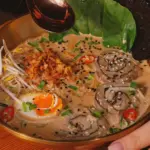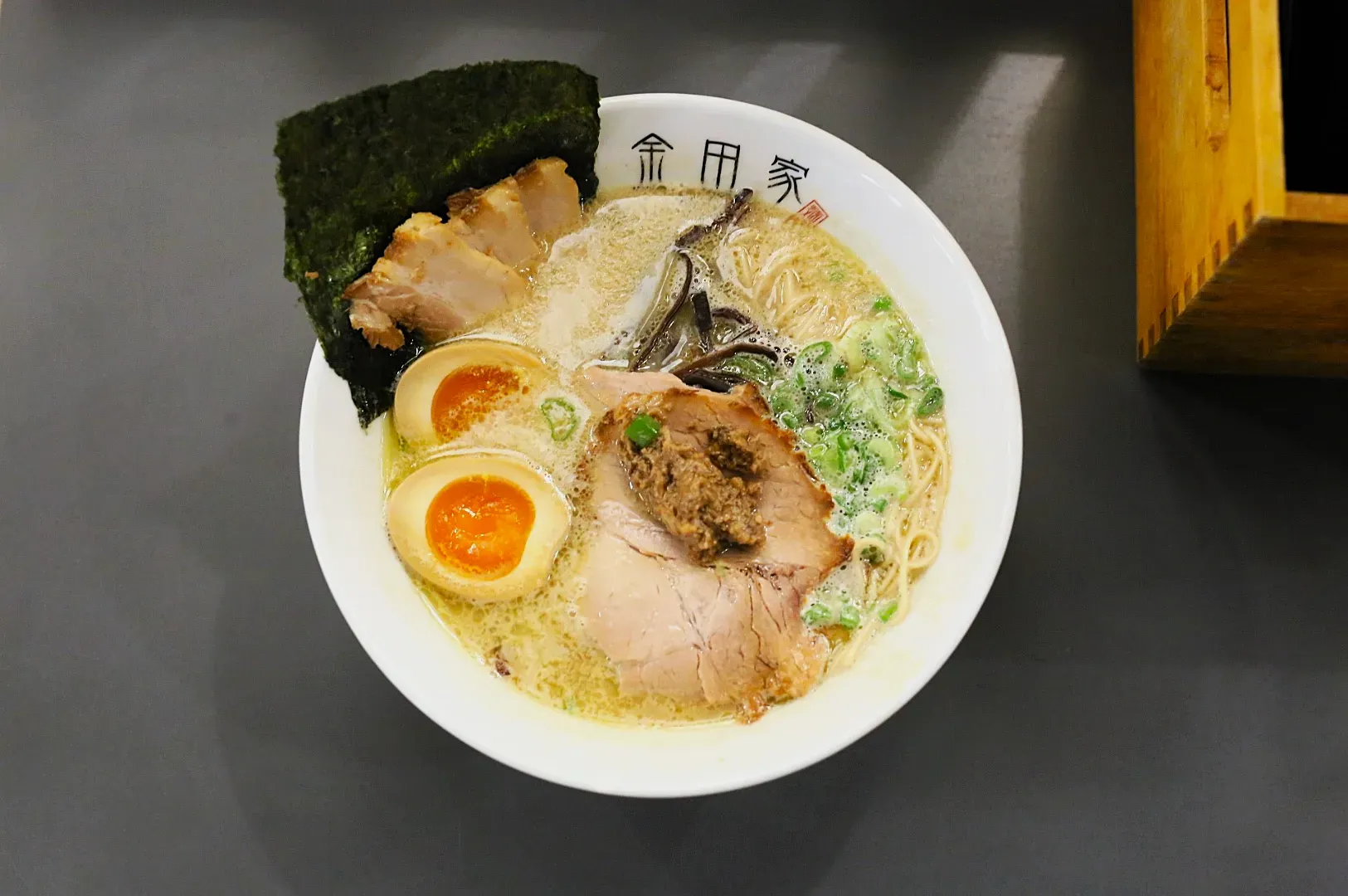


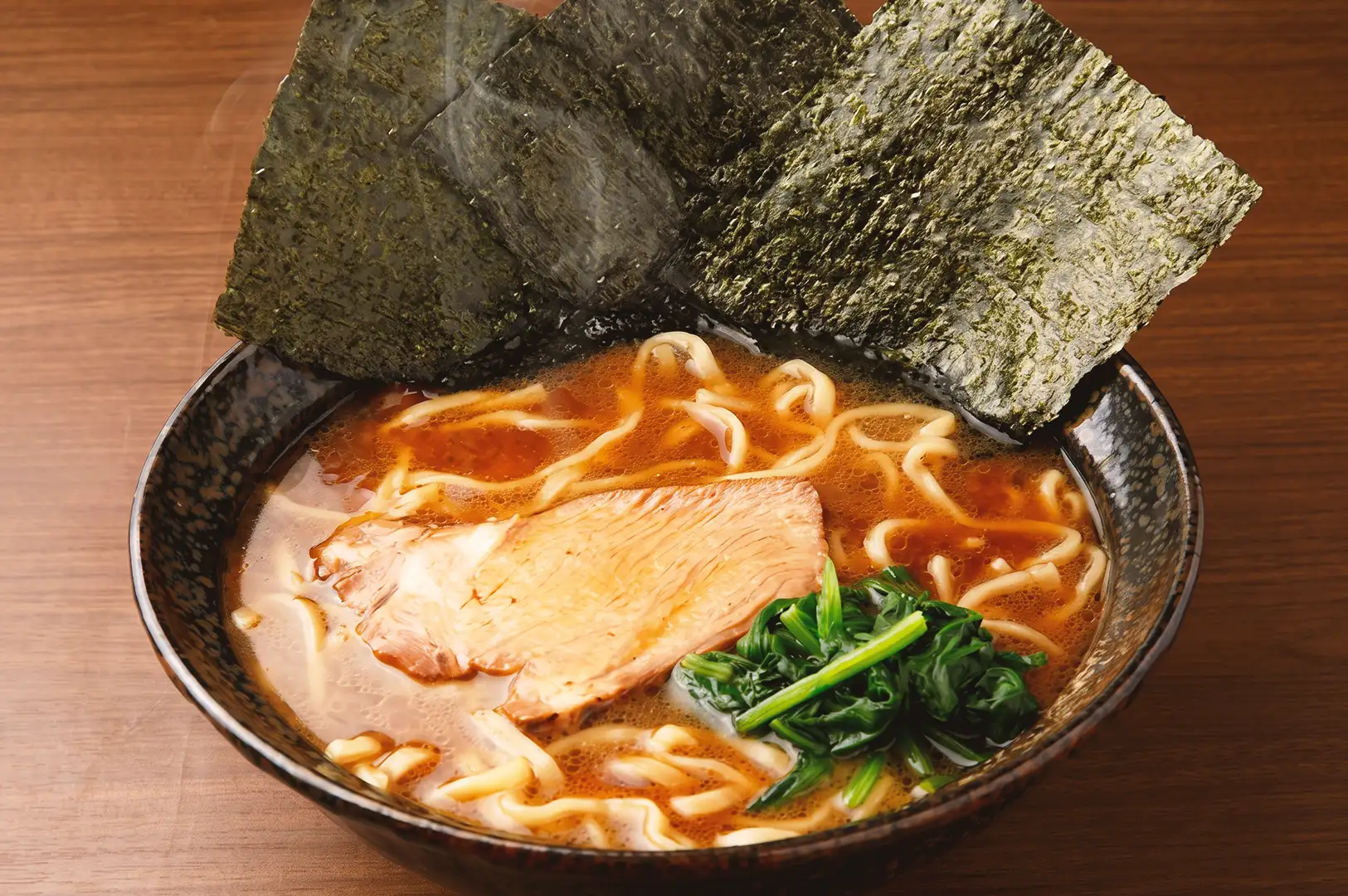
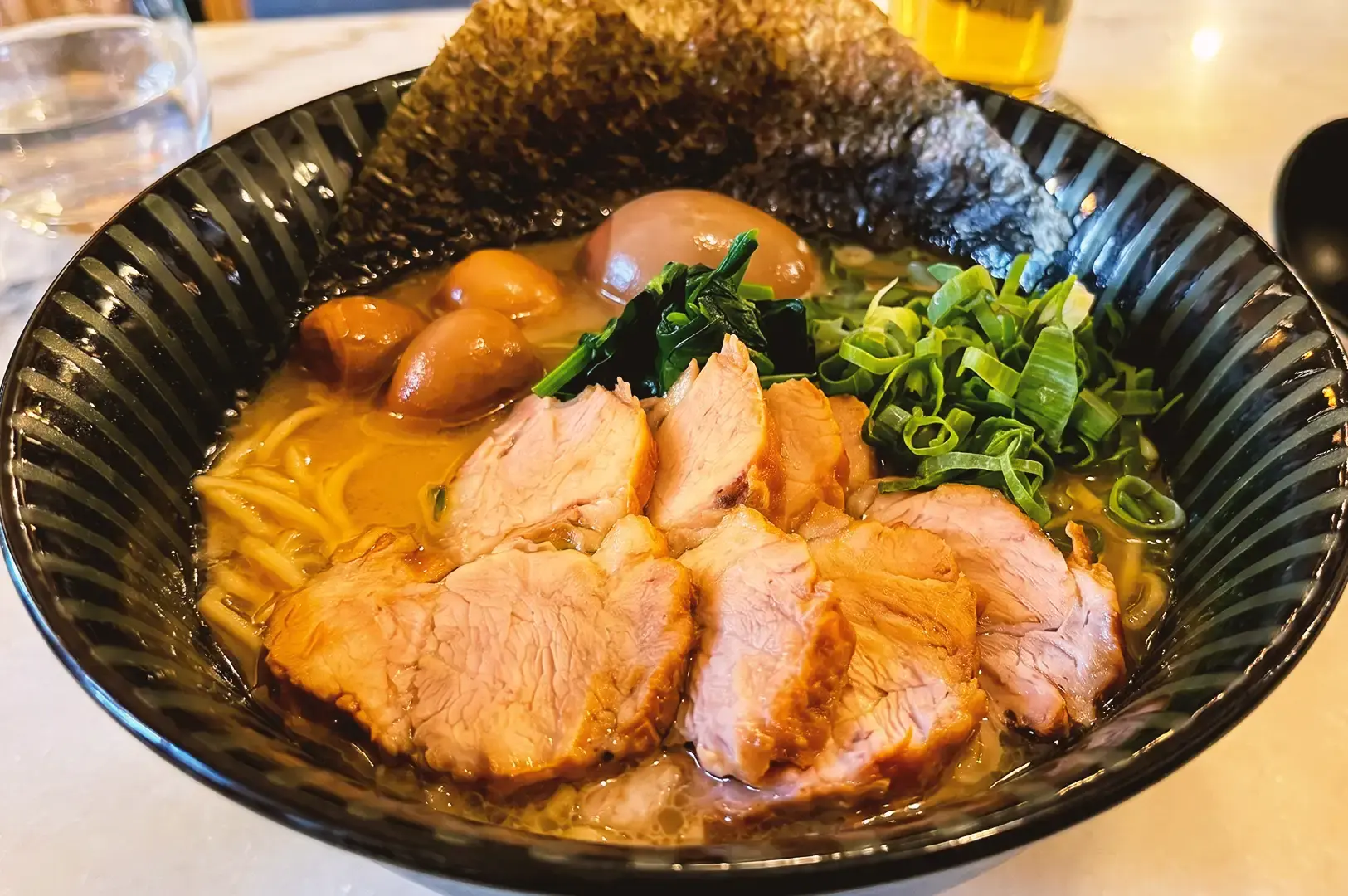
Picture the bowl landing in front of you. The surface is a deep, glossy tan with a shimmer of golden oil across the top. Three sheets of nori stand upright against the rim like little black sails. There's a tangle of dark green spinach, a slice of chashu, maybe a tiny quail egg tucked into the corner, and beside it all, a modest bowl of plain white rice.
Rice? With ramen? That was the detail that made me stop and look twice at iekei ramen. Then I learned what the name actually means, and suddenly the whole bowl made sense. This isn't a style you can fully understand by looking at it. You need the story behind it.
What Ie-kei Ramen Actually Means
Ie-kei (家系) translates to “house style” or “family style.” I love that it sounds warm and domestic, but the name has a more specific origin than that. Ie-kei literally evokes a ‘house lineage’ or ‘family line.’ The name came to describe shops descended from or influenced by Yoshimura-ya, many of which used names ending in 家.” meaning family or house. Fans also refer to its founder as Yoshimura-san.
Here's my favorite part: nobody sat in a boardroom and invented the term. The term emerged as a nickname for the growing family of shops descended from Yoshimura-ya. Shops that followed Yoshimura Ya's approach became part of the “family,” and the label stuck.
That's unusual in the ramen world. Plenty of famous styles are named after cities or regions. Yokohama iekei ramen, by contrast, is named after a single kitchen and the people who learned from it. When someone asks me what iekei ramen is, my short answer is this: it's a style defined as much by where it came from as by what's in the bowl.
A Style Ramen, Not a Single Recipe
Ie-kei isn't one fixed recipe. Classic ie-kei is associated with a rich pork-bone-and-soy broth, chicken oil, thick straight noodles, nori, spinach and chashu, though modern shops vary in how closely they follow that template. Each ramen shop may give its broth and toppings a slightly different character, and iekei shops often invite customers to customize their bowls.
Historically, apprenticeship lineage was central to ie-kei, but today the style also includes many inspired shops and chains with no direct Yoshimura-ya training lineage.
The Broth: The Essence of Delicious Ramen
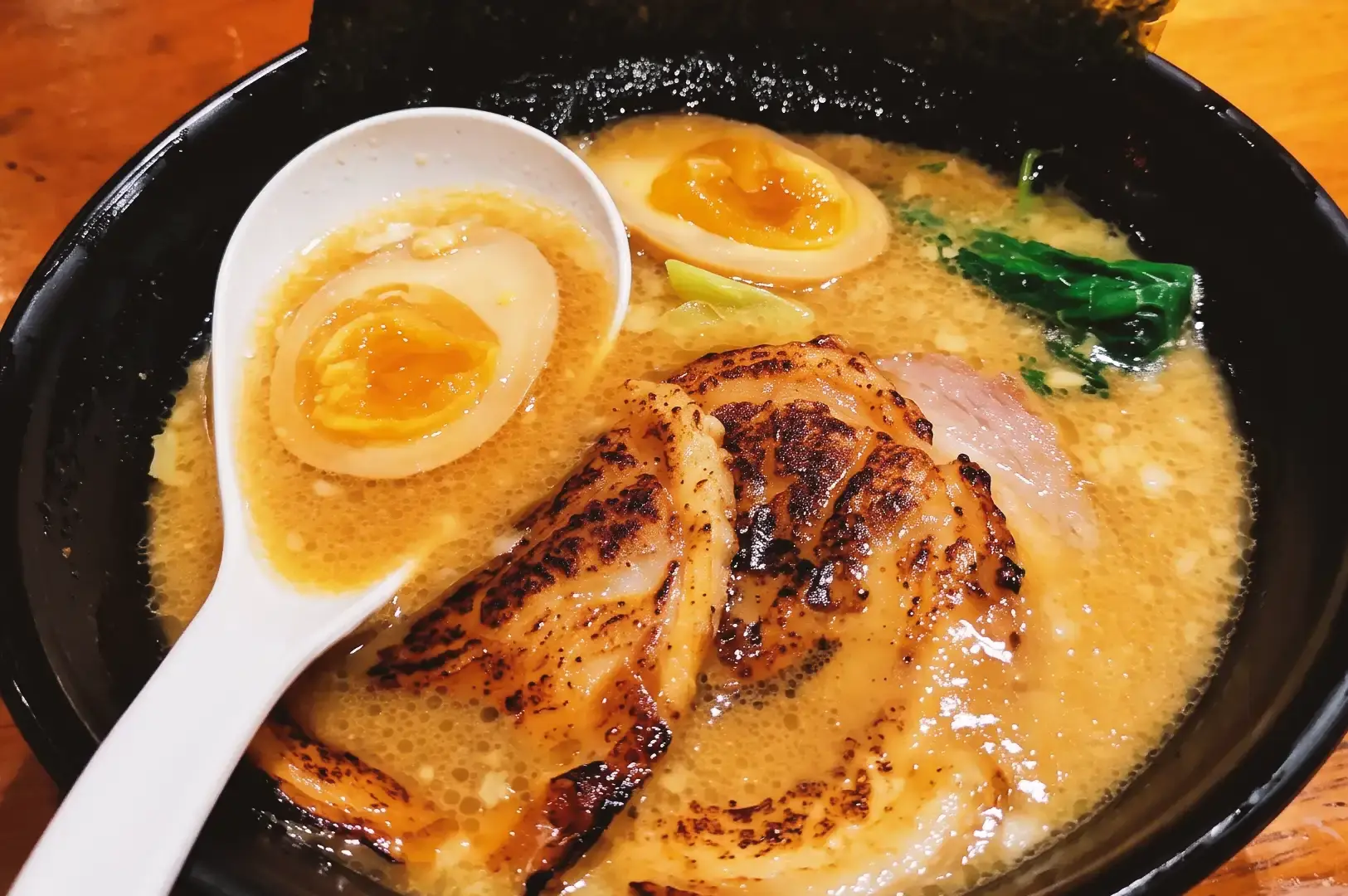
If I had to sum up iekei ramen broth in one sentence, it'd be this: it's the meeting point of two very different ramen worlds. The cooking takes time and care, but the result is a deeply savory bowl of delicious ramen.
The Kyushu Base
The foundation is tonkotsu, a rich pork bone soup in the Kyushu style. Pork and chicken bones are cooked together to create a rich, opaque stock. The bones may boil for hours in batches, releasing their flavor into the liquid. The exact prep and heat vary from kitchen to kitchen, but the goal is a broth with enough body to coat the back of your spoon.
The Kanto Seasoning
Then comes the tare, the concentrated seasoning sauce that gives a broth its character. In ie-kei, the soy sauce tare, or motodare, reflects the shoyu-forward ramen of the Kanto region. A strong soy-based tare brings the salty, savoury edge associated with Kanto-style shoyu ramen.
The Finishing Touch: Chicken Oil
Floating on top, you'll often find chiyu, or chicken oil. The layer of rendered chicken fat adds aroma and an extra layer of richness to every sip, and it's one of the details that separates ie-kei from a plain pork and soy broth. Some restaurants offer free toppings such as minced garlic, grated ginger, sesame seeds, or vinegar, so diners can adjust the flavor at the counter.
Why It Felt Radical in 1974
Today, blending pork bone broth with shoyu seems almost obvious. You'll see it everywhere. But when Yoshimura-san opened Yoshimura Ya in 1974, combining these two traditions was unusual and genuinely cutting edge.
I find that worth pausing on. Kyushu-style pork bone soup and Kanto-style soy sauce ramen came from different parts of Japan with different ideas about what ramen should be. Putting them together wasn't a safe move. It worked so well that the combination became the defining basis of ie-kei and influenced many later shops.
Yokohama Iekei Ramen Noodles: Built to Fight Back
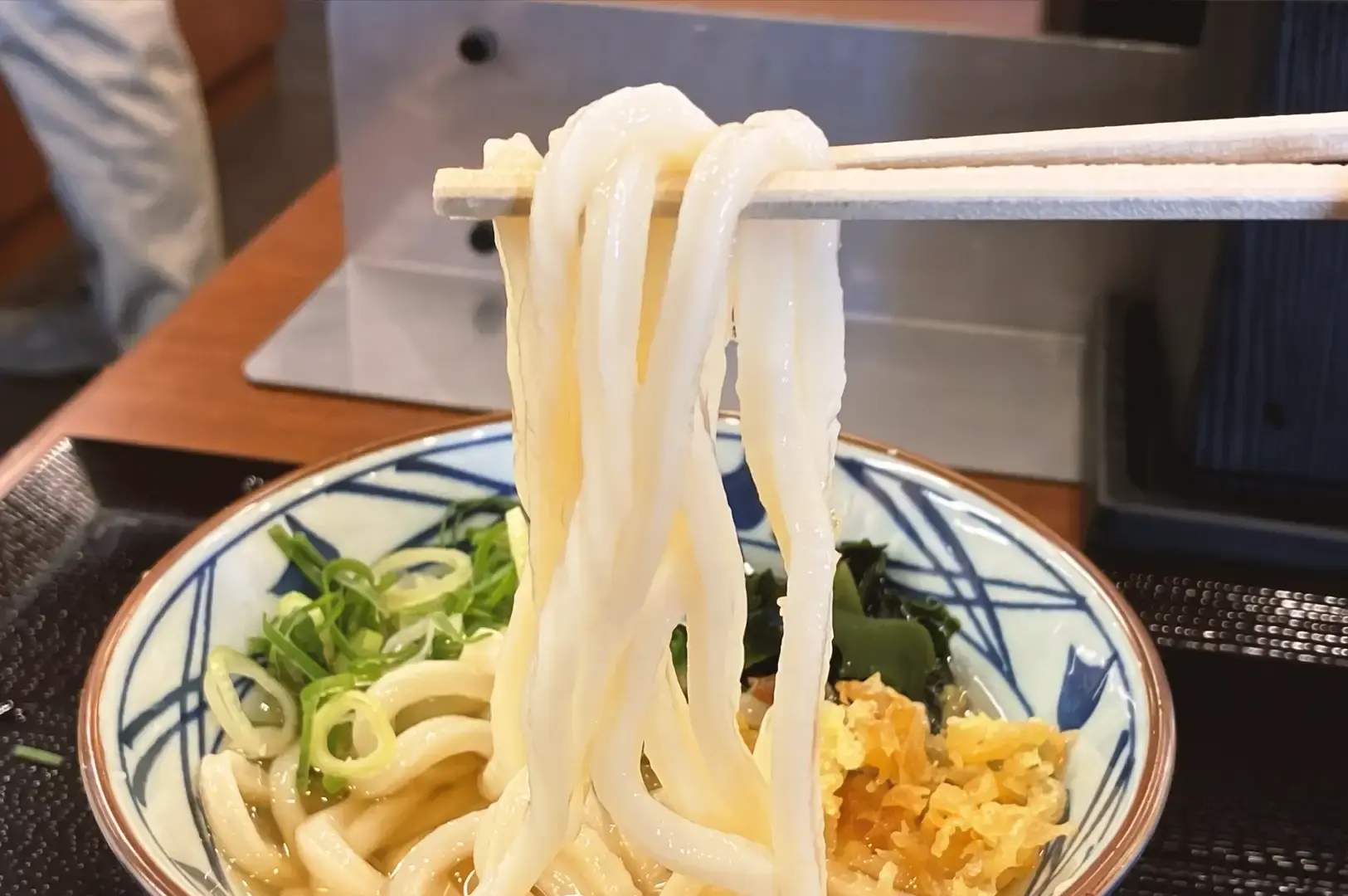
Iekei ramen noodles are medium-thick to thick, straight, and chewy. They're classically supplied by Sakai Seimen, a noodle maker in Yokohama. Some specialist kitchens make noodles from scratch, while others work with established makers; either way, the noodles are designed to cling to the heavy broth.
I think of them as noodles that fight back. In a broth this rich, a thin, delicate noodle would get lost. It would soften too quickly and disappear under all that pork, soy, and oil.
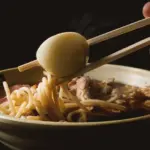
Thick, chewy noodles do the opposite. They hold their shape, carry the broth up with every lift of the chopsticks, and give your teeth something to push against. That chew is a counterweight to the richness. Every bite feels balanced rather than heavy, with a flat, straight shape that helps each noodle hold plenty of soup.
If you want to explore the style beyond ie-kei, our Yokohama ramen review looks at another side of the city’s ramen culture and what makes it worth seeking out
The Toppings That Aren't Optional
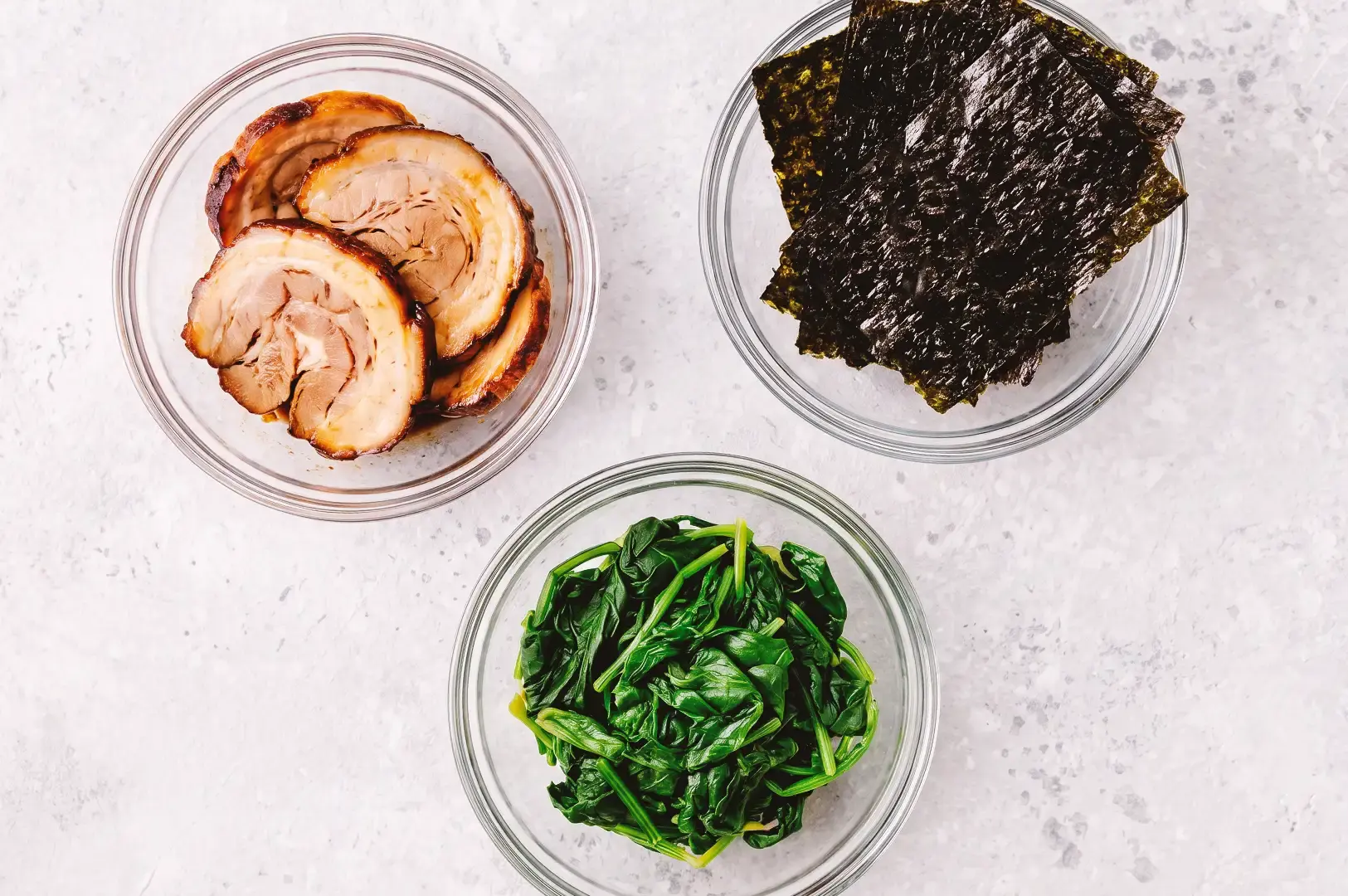
The toppings in ie-kei aren't random decorations. Each one has a job, and careful plating brings the contrasting colors and textures together.
Nori is the most striking. Those tall sheets of seaweed soak up broth and bring a briny, oceanic note that plays beautifully against the pork. I like letting a corner soften in the soup before eating it.
Spinach is the fresh relief. After a few spoonfuls of rich broth, that soft, slightly bitter green resets your palate so the next sip tastes vivid again.
Chashu, the sliced braised pork, adds savory, meaty substance and ties back to the pork bone base. Green onions or spring onions may bring a crisp, fresh bite, Some individual shops add extras such as quail eggs, but they are not part of the standard ie-kei topping set.
And then there's the rice. In ie-kei culture, a bowl of white rice on the side is common practice, not an afterthought. Once you taste the broth, the logic is clear. It's rich, salty, and deeply seasoned, which is exactly the kind of flavor plain rice is made for. I like to spoon a little broth over it, or wrap a few grains in a softened sheet of nori. It turns the meal into something even more filling and complete.
The Unusual Origin: A Truck Driver's Experiment
This is the part of the ie-kei story I find most charming. The founder of Yoshimura Ya wasn't someone with a long ramen pedigree. He had worked as a long-distance truck driver.
His idea was to bring together Kyushu-style tonkotsu and Kanto's soy sauce ramen in one bowl. The historical record doesn't tell us exactly how that idea took shape, and I won't pretend it does. But I love the image of someone outside the traditional path looking at two regional styles and asking, “Why not both?”
From One Kitchen to a Family Tree
What happened next is what turned a personal experiment into a full style. Yoshimura Ya opened in Yokohama in 1974, and for years, ie-kei stayed local to the city. Other shops trained in that kitchen, learned its approach, and carried it outward.
Eventually, the style spread across Japan. Today, it's one of the country's most popular ramen styles, with shops well beyond Kanagawa. Some visitors make a point of finding a bowl near Yokohama Station, though the original story is rooted in the city’s wider food culture. That's the real meaning of “family” in the name. Ie-kei grew the way families do, one connection at a time.
Ordering Like You Mean It
Here's where ie-kei gets really fun. Customization isn't a bonus feature. It's central to the experience. Regulars order by preference, and shops expect it. Many let customers choose noodle firmness, broth strength, and oil amount; a wide array of optional condiments may be available, though the selection differs by restaurant.
These are the key requests you'll want to know:
Katame: firmer noodles. Great if you love that chewy, fight-back texture.
Koime: stronger, more intensely seasoned broth.
Usume: lighter broth. A gentler option if you'd like to taste the pork and soy without as much intensity.
Oome: more oil: More of that golden chicken oil for extra aroma and richness.
Why do regulars bother? Because these small tweaks can change the whole personality of a bowl. Firmer noodles with a lighter broth feel completely different from soft noodles in a rich, oily soup. Once you find your combination, the bowl starts to feel like it was made for you. That, I think, is part of the “house style” spirit too.
My suggestion for a first visit is to try the standard bowl. Then adjust next time, one change at a time, so you can actually taste what each request does. If you have a question, comment or ask the staff; a busy line of hungry customers can move quickly, so decide what you want before reaching the counter.
Where Iekei Ramen Fits Today
If you're curious about iekei ramen in Singapore, it helps to understand where the style sits among the others you already know. It shares its pork bone backbone with tonkotsu and its soy sauce seasoning with shoyu ramen, yet it isn't quite either one.
The chicken oil, thick noodles, upright nori, spinach, and side of rice give it a personality all its own. Compared with Hakata ramen, ie-kei is known for thicker noodles and a more pronounced soy sauce flavor. Its mix of regional influences has helped it remain a beloved style ramen across Japan.
I don't see any of these as competitors. Tonkotsu, shoyu, ie-kei, and everything in between each answer a slightly different craving. None of them is more “real” than the others. Ie-kei just happens to tell its story through a blend, a family tree, and a bowl of rice.
Limited Time? Make Time for a Bowl
A good ramen meal can be part of everyday life, not just a special outing. Whether you're visiting for a limited time or have a week to explore, seek out a specialist restaurant and savor the bowl rather than rushing through it. Check opening hours and, if needed, contact the shop by mail before you go; every location has its own service details.
Ie-kei rewards people who eat with intent. Taste the broth before anything else and notice how the soy sharpens the pork. Lift those thick noodles and feel them push back. Let the nori soften, eat the spinach when the richness builds, and don't ignore the rice.
Then, next time, make it yours. Ask for katame. Try kotteri or usume. Add a little abura oome if you're feeling bold. Like any culinary art, the best way to understand it is to taste, pay attention, and enjoy the details.
If one bowl has you curious about the next, our article about the best Japanese ramen restaurants in Singapore is a good place to keep the slurping going.